Translated from the French. The original, Art génératif : de la découverte à la publication d'un projet dans un studio prestigieux, is on my personal site.
One deliberate change in this version: where the French says "art génératif", this one says algorithmic art. The meaning of "generative art" has not changed, but since generative AI took over the word, people who do not know the field tend to assume my projects are made with AI.
You know by now that I am a curious person. I love discovering new disciplines and spending months or years exploring them. I have written before about music production, vegetarianism and the electric guitar.
Here I want to write about the passion that has taken up most of my time these past few years: algorithmic art. From my first scripts producing simple animations, to a show in New York and a drop (a project launch, in our jargon) with one of the most demanding studios in the field, this is the story of an adventure I did not see coming.
Edit: after this piece was published in French, I was invited to give the closing keynote of DevFest Toulouse 2023 on the subject.
Here is a more recent version, presented at MiXiT 2025.
What is algorithmic art?
Algorithmic art is artistic creation, usually digital, that uses algorithms to produce work which generates itself or is not determined in advance.
I will also talk about creative coding, which is a broader definition. It means using programming as a medium of artistic expression in its own right: visual, musical, literary, interactive, performative.
Discovering creative coding, and first steps on Hic Et Nunc
It starts on the day I decide I want to learn to draw. I have no skill at it whatsoever, but I am curious. I like the idea of a new passion disconnected from screens. I picture myself with a notebook and a pencil at a café terrace.
I ask an artist friend to give me a lesson. Her lesson is great, but unsurprisingly I quickly realise I have everything to learn and that the road is long. Before long I want to make more geometric drawings, then to work on an iPad with Procreate to compensate for my lack of dexterity, then to do vector drawing, and then I go back to my computer to code what I had been trying to make. That is how I take my first steps in creative coding.
I start with p5.js, a JavaScript library, probably the most widely used, especially by beginners. You could describe it as Microsoft Paint, but in JavaScript. There are plenty of tutorials, a thorough reference, books, an online editor. I start playing with mathematics, physics, the classic algorithms of the field, noise, randomness.
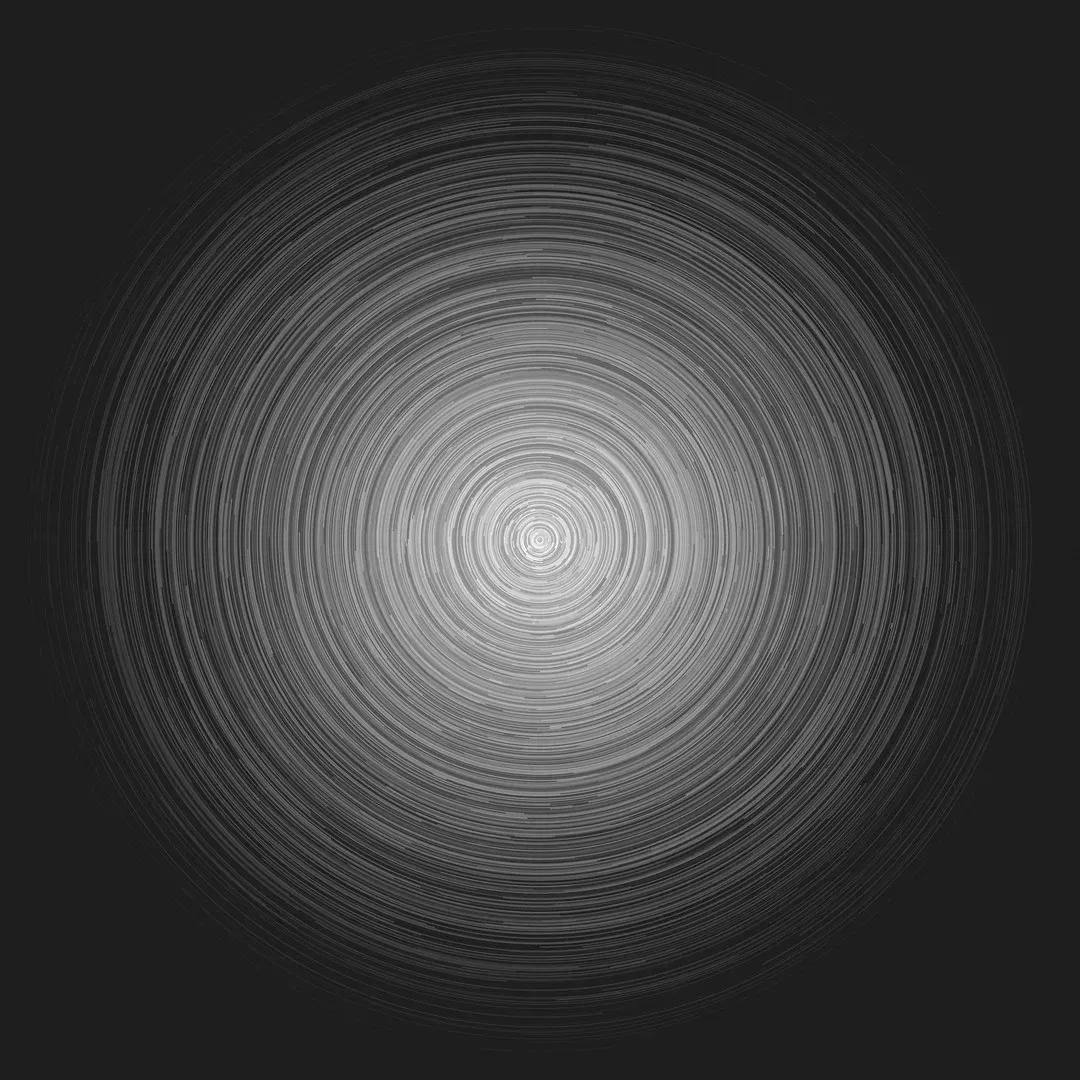
As I sink further into creative programming, I start following a lot of artists on Instagram and Twitter, learning from their work and experimenting with my own ideas. It is a period of exploration and discovery.
This is when I make my first drops on Hic Et Nunc. I begin by publishing perfect loops, animations that repeat endlessly. To my great surprise those first drops are well received, and I start getting valuable feedback from my very first collectors.
Animated Rays 01, on Hic Et Nunc
Discovering long-form, and first drops on fx(hash)
From here on I will mostly be talking about long-form, a format popularised by platforms like Art Blocks and fx(hash). The concept works like this:
The artist writes a generative script, which is recorded on a blockchain, making it permanent, immutable and verifiable. The artist then specifies how many iterations, or pieces, can be created from that script, usually a few hundred. When a collector buys an iteration, the script runs to generate a new piece, which is wrapped in an NFT and transferred directly to the collector. When the script runs, nobody knows exactly what will come out of it: not the collector, not the platform, not the artist. It is a surprise for everyone.
I publish, or drop, my first long-form projects on fx(hash) very shortly after it opens. The first one is SEA: a very simple project, made in a few days, from which I learn an enormous amount. 150 animated editions, built quickly just to play with fx(hash).
The pieces find collectors quickly. I talk to some of them and meet nothing but lovely people, as amused as I am at watching what everyone is doing with these platforms, at being spectators to all this ferment and creativity, and generally well informed about algorithmic art and NFTs.
That is how I end up publishing some fifteen projects on the platform in a few months. Each time I try new techniques, question the aesthetics, test new concepts.
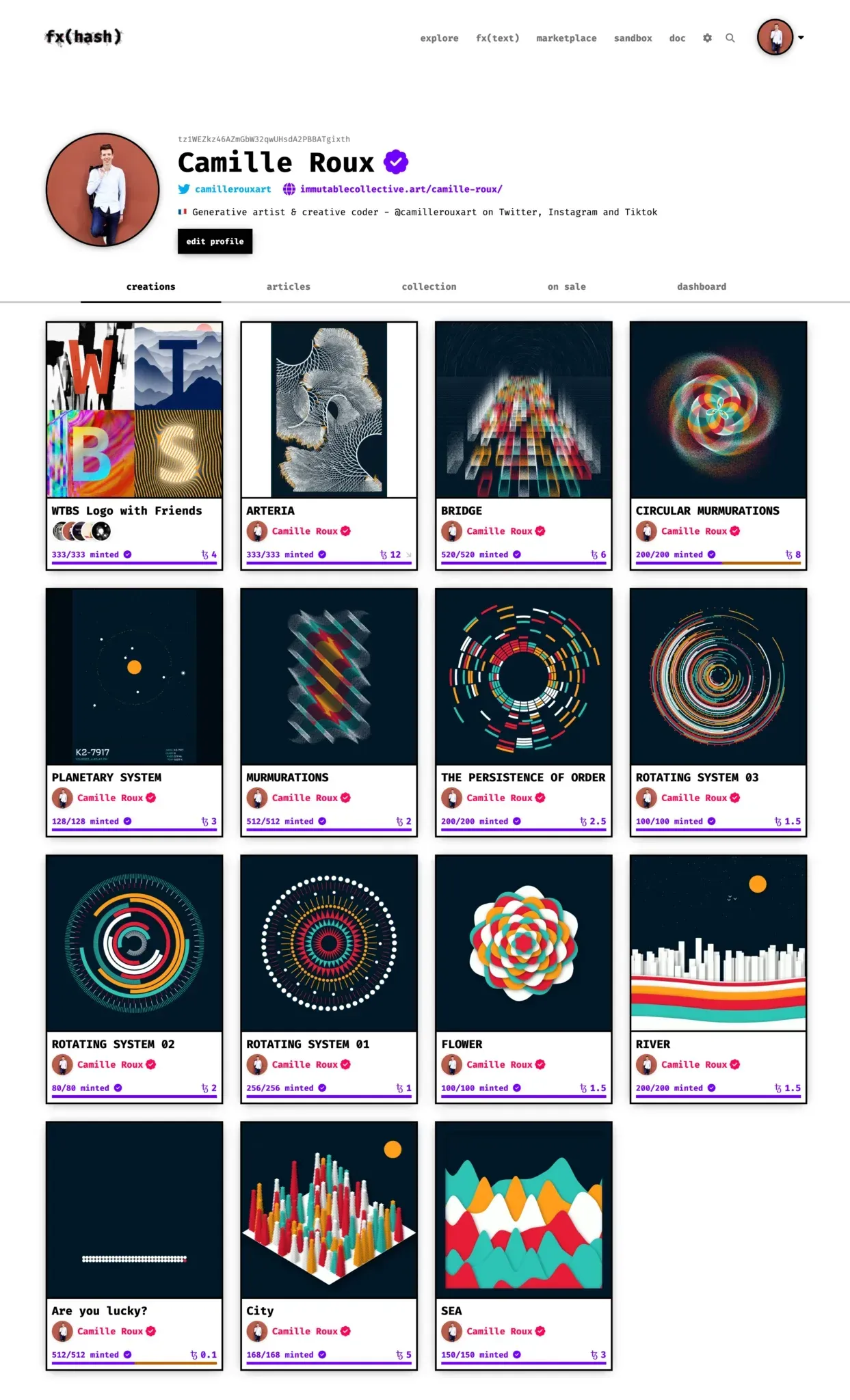
Let me tell you about two projects I am particularly attached to.
BRIDGE
BRIDGE is a collaborative project for which I published the code on GitHub and invited any artist who wanted to contribute. It is a long-form project of 520 editions. The concept is simple: write a piece of code that draws a bridge in p5.js, respecting the given positions of the deck slabs. Each minted piece has a default style, but the collector can cycle through all 26 styles on their bridge.
The project introduced me to several artists I still talk to. It is fascinating to see the diversity of styles that came out of identical constraints.
ARTERIA
I also want to mention ARTERIA, probably the fx(hash) project I am proudest of so far. It has 333 editions. At that point I wanted to take more time, to attempt more complex and more considered projects. There is a making-of describing how it works and how it came about in detail.
The name ARTERIA means "artery" in old Occitan. The project is an exploration of autonomous agents: entities that follow a set of simple rules, here in order to draw paths.
In ARTERIA the agents have a default behaviour: they move straight ahead, they reproduce, and they die when they meet the trajectory of another agent. As they move they draw small circles. The system starts from dozens of random initial parameters: level of recursion, position and size of the agents, colours, birth angle, distribution. The possibilities are endless.
Local rules can then be applied on top. All the agents in the upper half might slowly turn, for instance. The final result is the product of the initial parameters, the interactions between agents, and the local rules. It is a piece about the beauty and complexity that can emerge from simple rules and autonomous interaction.
ARTERIA #166
"I would have liked to be an artist"
The ARTERIA drop is a success on fx(hash). I start having collectors who follow my work closely, who buy and share my projects, who advise and support me. It makes me want even more to take my time, to keep working on the aesthetics, to build richer and more complex generators. It is getting serious.
Here is a podcast recorded in June 2022 in which I am interviewed by Lucie-Eleonore Riveron, CEO of the Paris auction house FauveParis. I talk about how I got here, but also about the impostor syndrome that makes it hard for me to think of myself as an artist, about the preconceptions I carry about "real artists", and about what I want to do next.
fx(hash), which I have talked about at length, is an open platform: anyone can post a project whenever they want, and there is a great deal of excellent work on it. But there are many others. Some are equally open; others require the project to be selected by a curation panel. Platforms like gm.studio, or Art Blocks with its Curated section, can be extremely demanding.
So I set myself a challenge: could I too land a drop with one of the platforms I keep admiring from a distance?
FOLRADURA
I keep experimenting with a new long-form project, FOLRADURA, published on 256ART. It explores the creation of organic patterns through a mix of mathematics, physics, noise and chance.
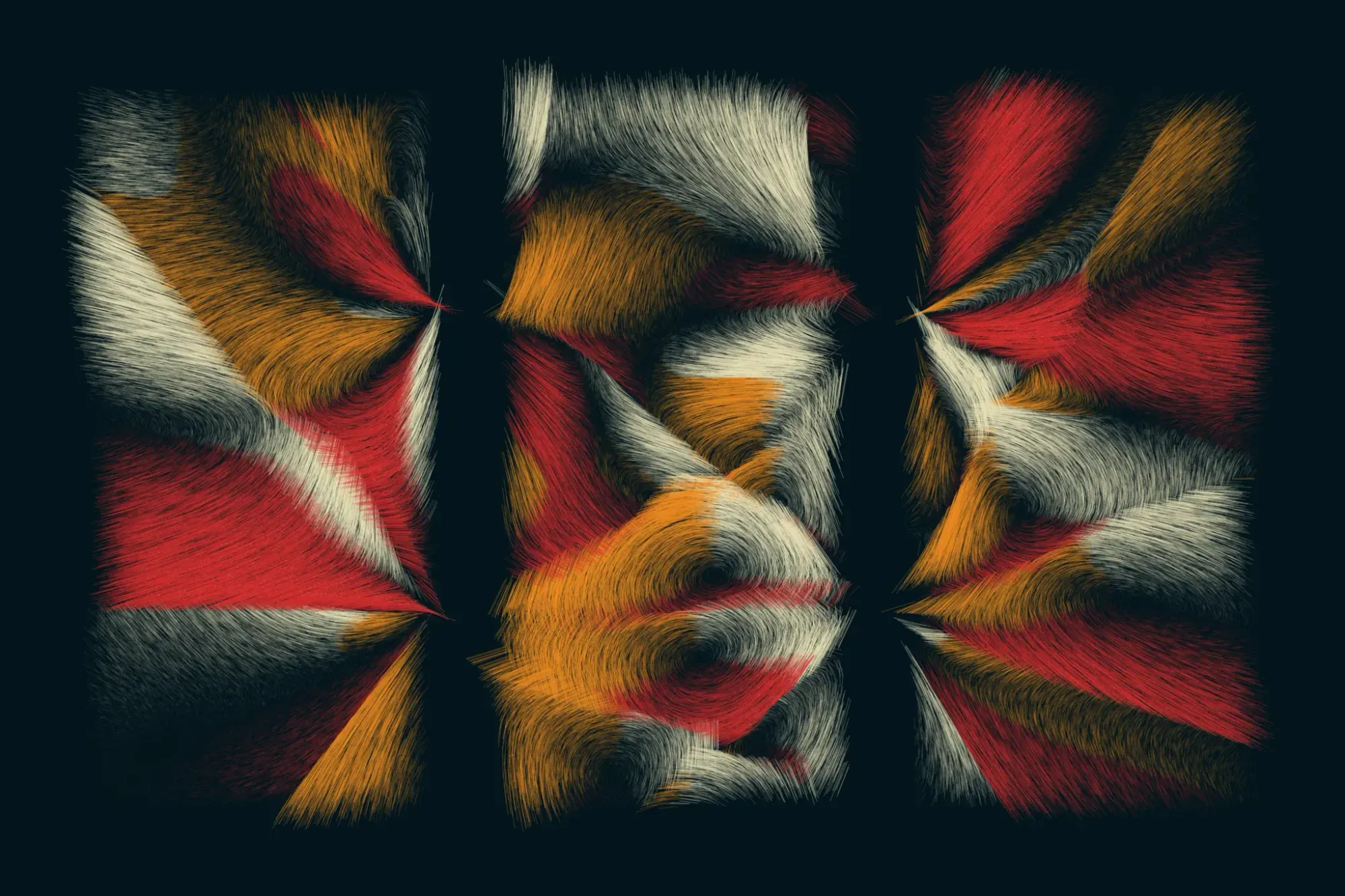
FOLRADURA rests on one main concept: local modifiers. A modifier applies a local effect, an attraction for instance, to a grid of hundreds of thousands of points. What you see is the path of those points, between their initial and their final position. Each edition plays with one or two types of modifier. They can be placed in different ways, sometimes randomly, sometimes on a grid. Each produces very different effects depending on its configuration and on its type: squares, spirals, lines, waves.
Every point is influenced by every modifier. All that complexity produces a very organic look and a great deal of detail. The project was a success, and it showed the aesthetics and complexity that can emerge from simple rules and autonomous interaction. There is a making-of if you want more.
FOLRADURA
— Camille Roux - Generative artist (@camillerouxart) July 5, 2022
My first long-form series on Ethereum and my first series on 256ART, launching on 9 July 6pm CEST.
➡️ Win a free mint!
To participate:
📌 Follow me and @Mint256ART
📌 RT this post
📌 Reply with your ETH address
Good luck! pic.twitter.com/Llvl3lCUh1
More on FOLRADURA
INTRICADA
Having loved working with autonomous agents on ARTERIA, I decided to take the concept back up and push it in a new direction.
The name INTRICADA means "interlaced" in old Occitan. The project explores the balance between emergence and control, a recurring theme in algorithmic art.
INTRICADA is built on autonomous agents similar to those in ARTERIA. The agents draw very small dots and follow simple rules. I designed INTRICADA as a simulation: set initial conditions, then watch what comes out. Each piece is the result of thousands of unforeseeable consequences.
What makes INTRICADA singular is the sheer variety of possible outcomes. Many parameters influence the initial position and direction of the agents, the colour palettes, and much else. Every combination produces a genuinely distinct result.
INTRICADA offers a visual experience on several scales. From a distance a piece can look like intersecting circles, like geometric patterns, like confetti. Closer, you see that those shapes are made of a multitude of agent trajectories. Closer still, you see that those trajectories are made of dots, several hundred thousand per output.
INTRICADA was dropped as an open edition, meaning there was no limit on the number of pieces that could be created, only a time limit. I had the honour of being selected by Bright Moments as their artist of the month in March 2023. What is particular about Bright Moments is their care in giving a physical and human dimension to the projects they publish. INTRICADA was shown in cities around the world: New York, London, Mexico City, Venice Beach, Berlin and Tokyo. An incredible experience.
Introducing @camillerouxart as the March Artist in Residence minting 'Intricada'
— Bright Moments (@brtmoments) February 28, 2023
And we will doing a Mint #1 giveaway!
To participate:
📌 Follow @camillerouxart & @brtmoments
📌 RT this post
📌 Register here: https://t.co/rC9IVpyDQ9
Learn more about the project ↓ pic.twitter.com/Zd0zsAG0Ax
More on INTRICADA
The Source
Alongside INTRICADA, since July 2022, I had been working on a collaboration with a long-time friend and business partner, Matthieu Segret. From my earliest days in this world I had been telling him about what I was finding. It did not take him long to be tempted himself, and his fx(hash) profile is worth a look.
By the summer of 2022, algorithmic art had been taking up a substantial share of our free time for a year, and we talked about it constantly. An idea slowly took shape: what if we pooled our skills into an artistic collaboration? Find an idea, enjoy ourselves, do our best, and see what came out.
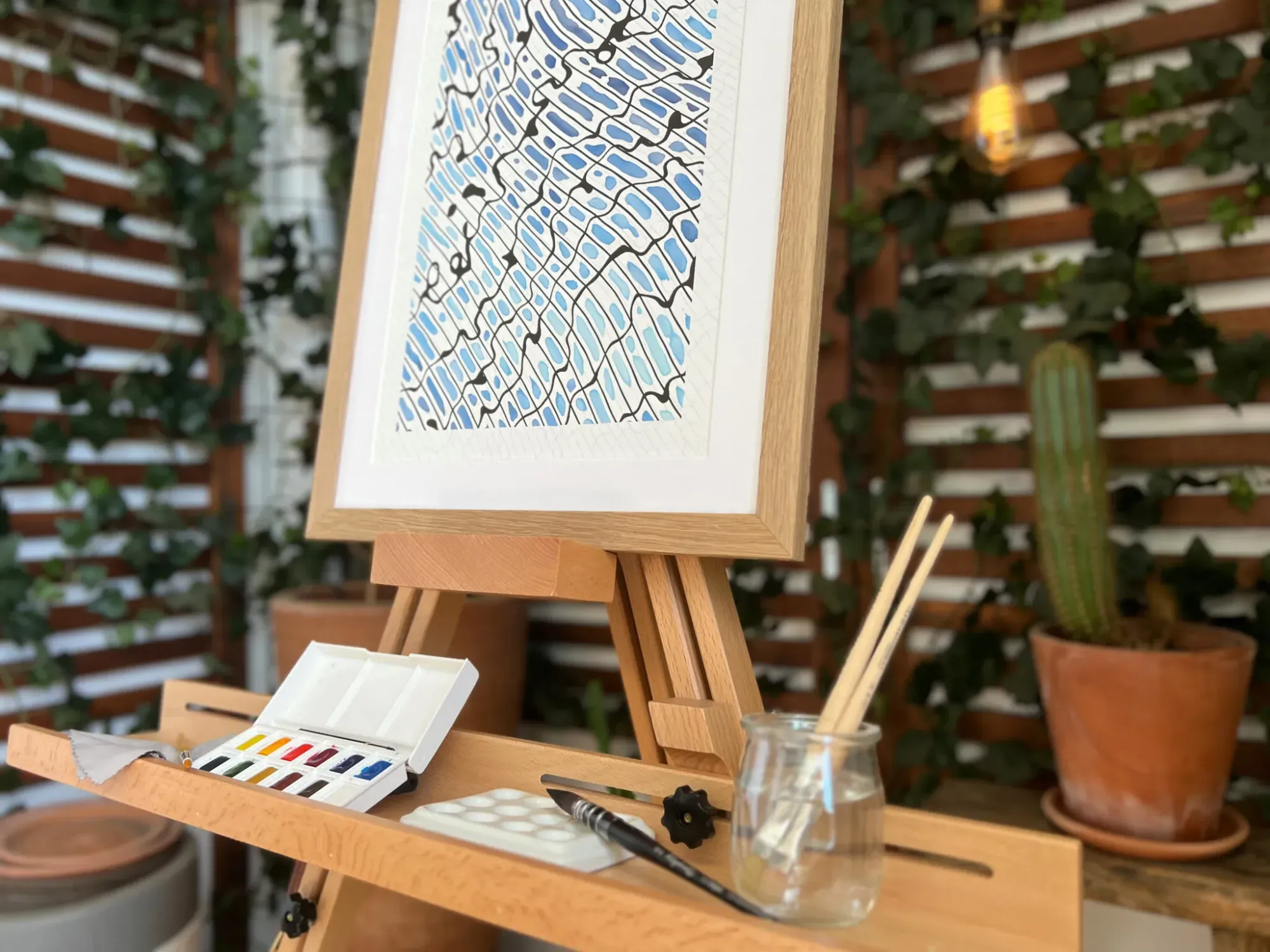
For this project Matthieu wanted to play with textures and try to achieve a physical quality in the render; I wanted to work with mathematical concepts.
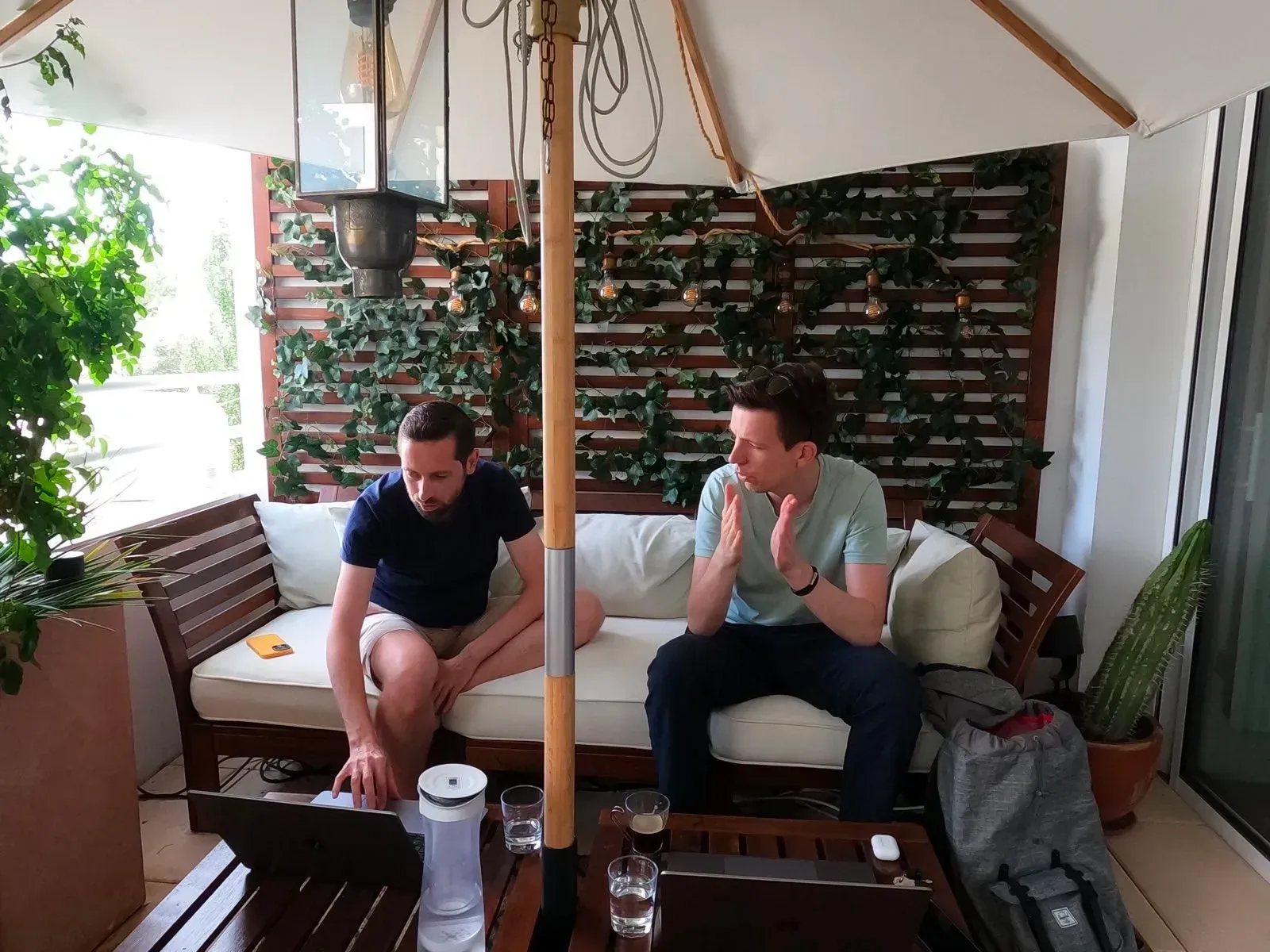
That was the start of months of thinking, brainstorming, trials, code, debugging, doubt and joy. After a few months we found our through-line: to represent water abstractly, in its various forms, with coloured reflections drawn from places around the world. During that period we regularly rented places to work together, sometimes by the sea or a river, for the inspiration.
We have already told the story of how the project came together in detail, so let me jump forward a few months.
By early 2023 we were very happy with what we had. It was almost certainly the best project either of us had made. Being two, and spending that much time on it, let us work every detail. We had a project, a name and a presentation deck. Now we had to find somewhere to publish it. We pitched it to several platforms, including the ones I had been dreaming about for a while.
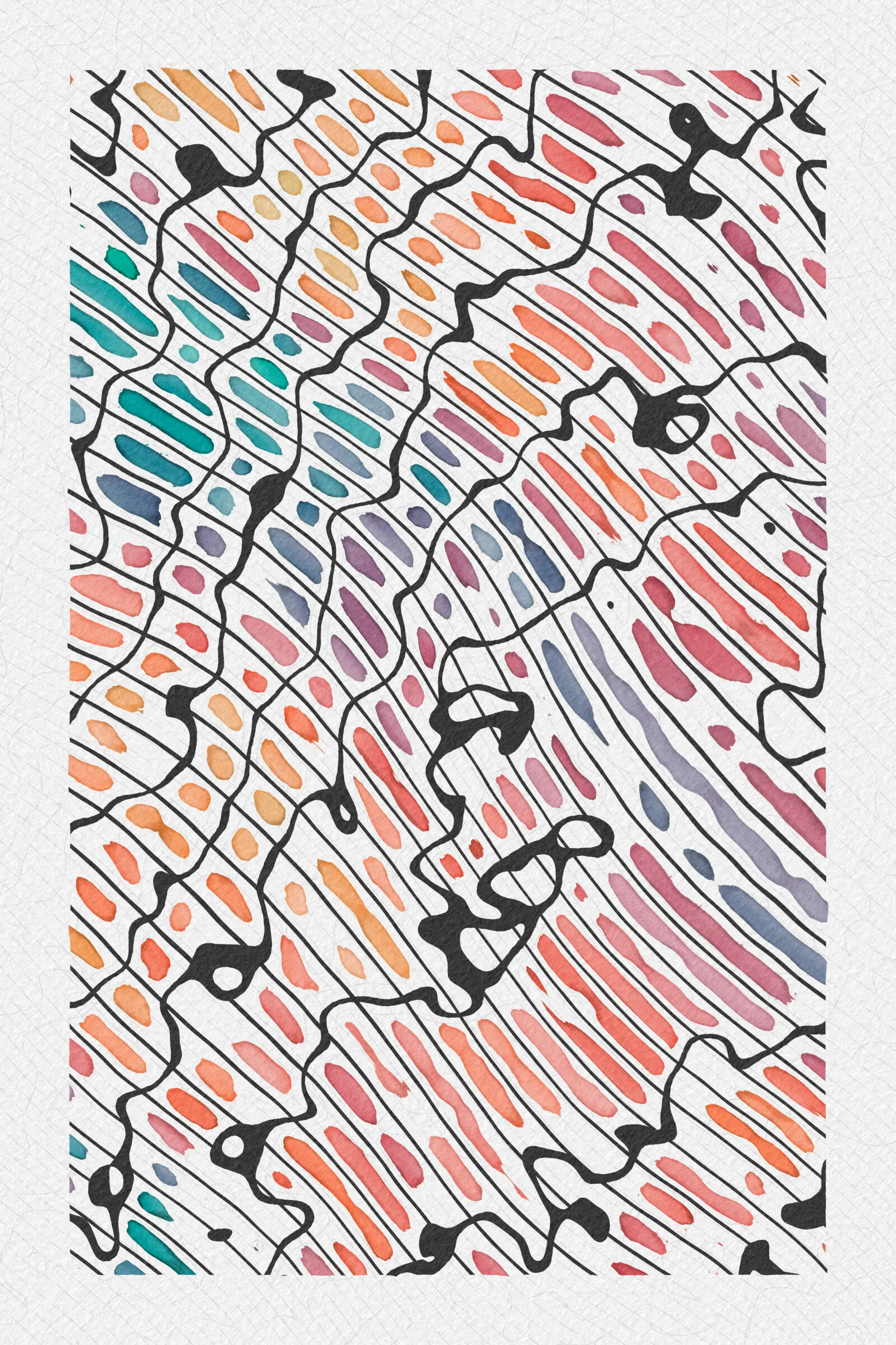
In early May the news came: gm.studio wanted to publish it. What is particular about gm.studio is that the curation panel does not know the artist's name. It makes for a fairer and more inclusive selection, based on the project alone. We love the platform and we love their selection. And to top it off, it was the first time a project had been selected unanimously by the panel. We were more than delighted, and we signed without hesitation.
The Source came out on gm.studio on 31 July 2023. I will let you admire the teaser they made for the occasion.
Introducing 'The Source', by @camillerouxart & @MatthieuArt
— gm.studio (@gmDAOstudio) July 14, 2023
Coming July 31st to gm. studio pic.twitter.com/H4QZFLAVX7
More on The Source
- Project page
- The project on gm.studio
- The story behind The Source
- Episode of the NFT Morning podcast (in French)
The Destination, at Bright Moments Paris
The adventure did not stop there. Matthieu and I decided to keep collaborating. Starting from the source code of The Source, we built an entirely new project drawing on the same universe: The Destination.
The Destination is an ode to curiosity, a piece about the diversity of paths one can take and the multitude of subjects there are to discover. Each planet or star represents a field to explore. Matthieu and I combined our own enthusiasms to bring the series to life; it celebrates the whole journey towards a goal as much as reaching it. The title is also a nod to our first collaboration.
The project took us to Bright Moments Paris, where we got to meet collectors of ours, and artists we admire and talk to regularly.
Bright Moments Finale, in Venice
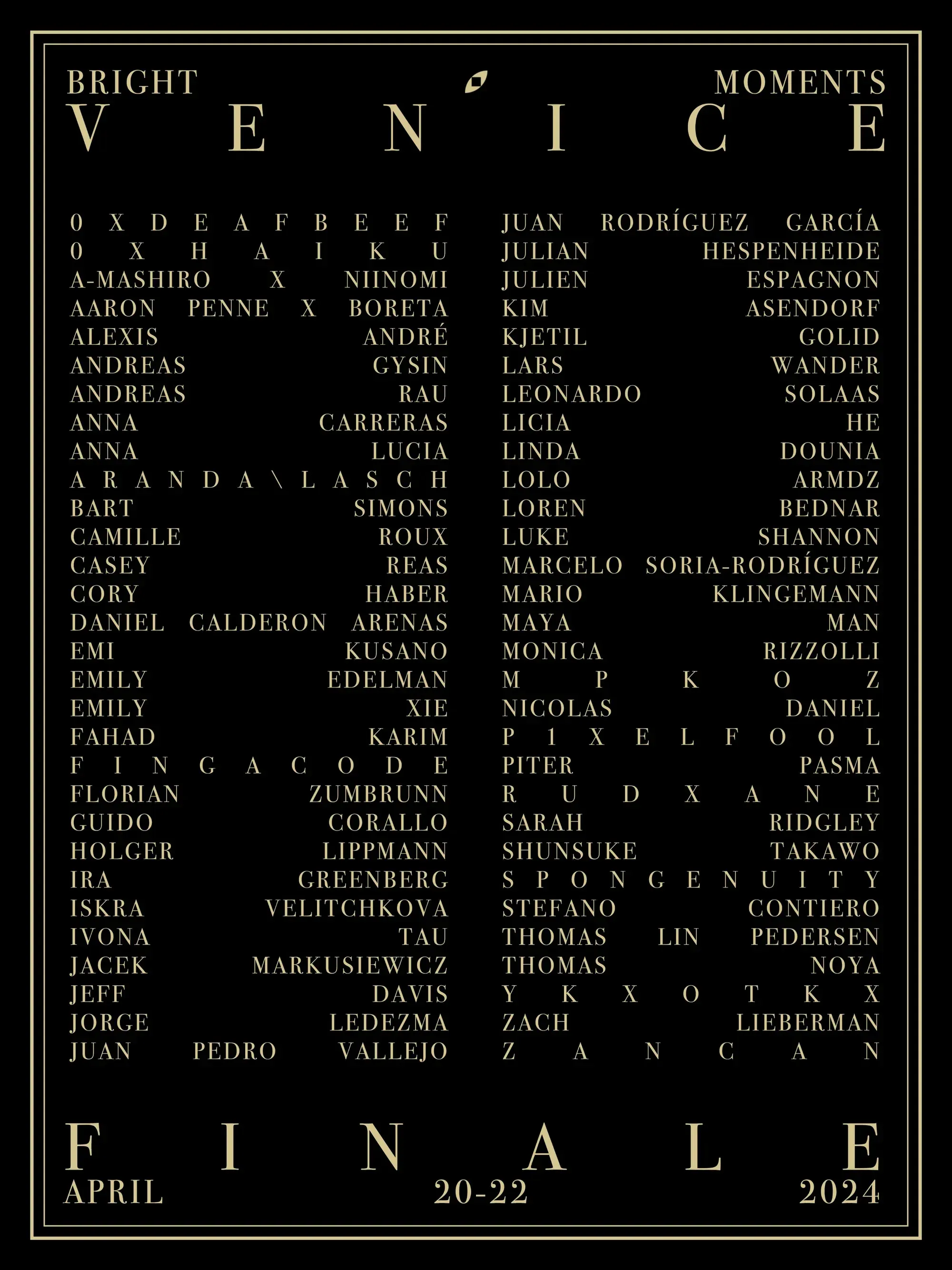
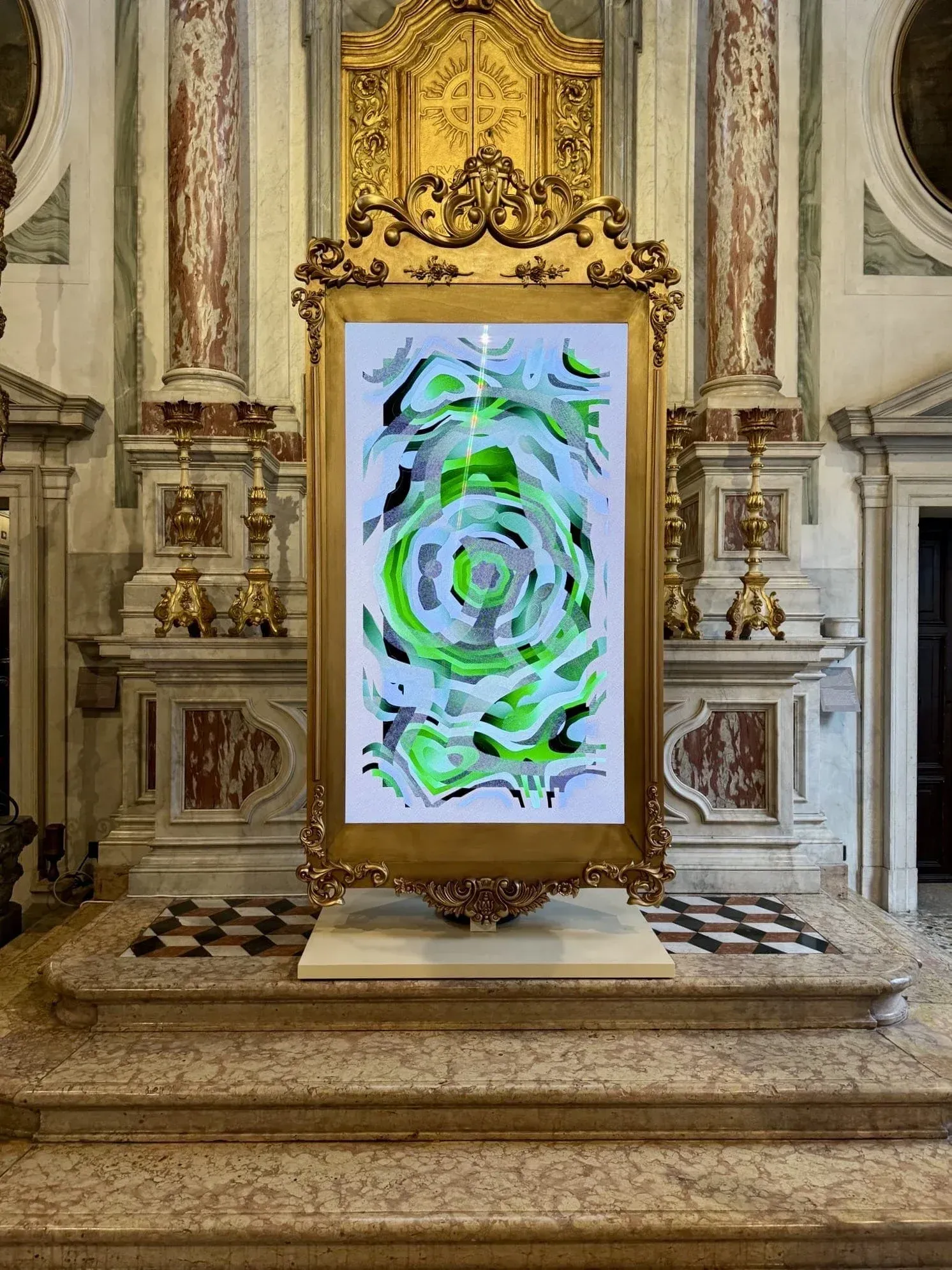
Bright Moments then invited me to work with them again for their final event, this time on a unique project shown during the 2024 Venice Biennale. The piece is singular in that it combines the work of over sixty artists who had been pivotal to the gallery's history.
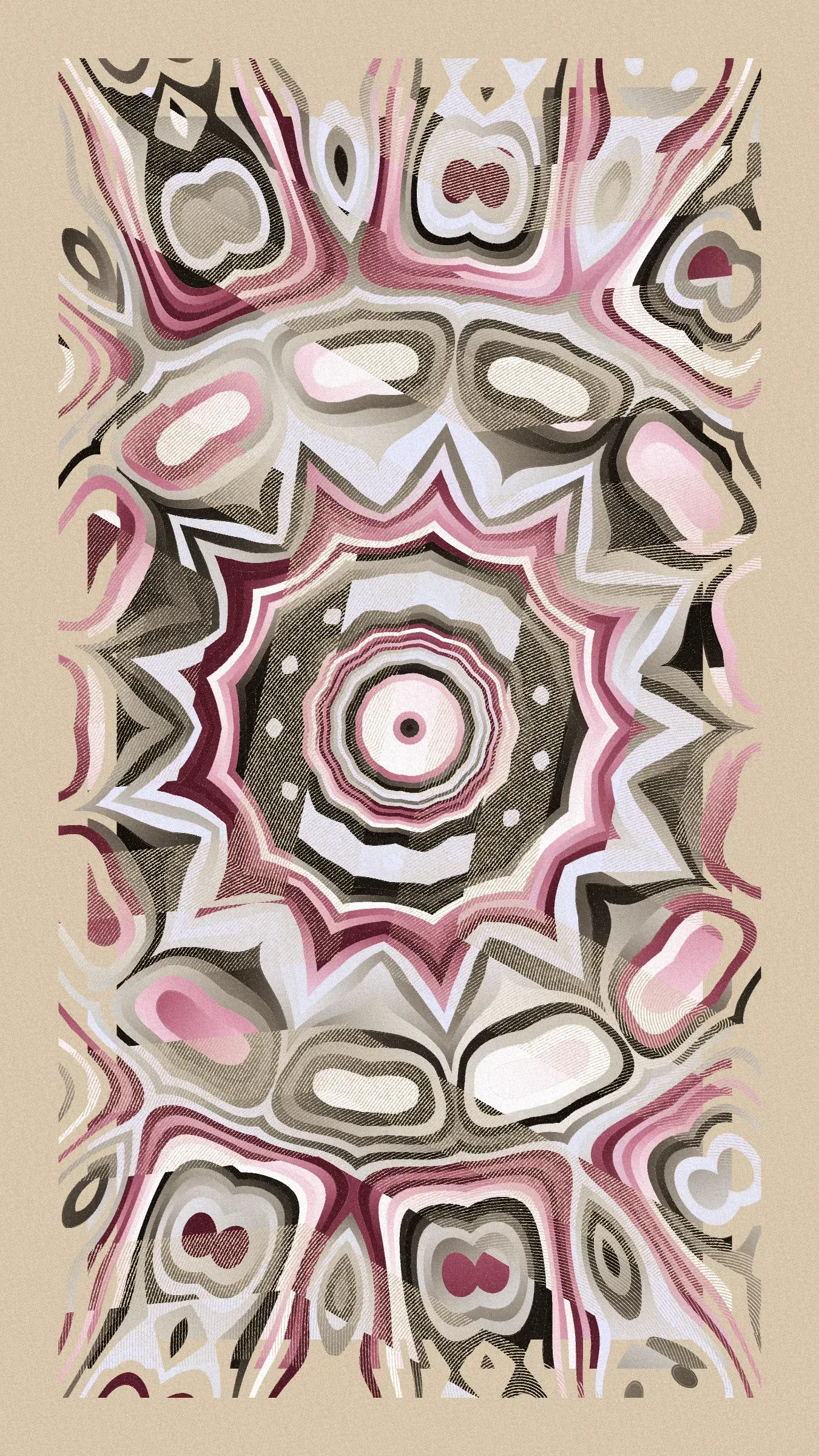
It was a pleasure to see my work presented in such an extraordinary setting.
Résilience
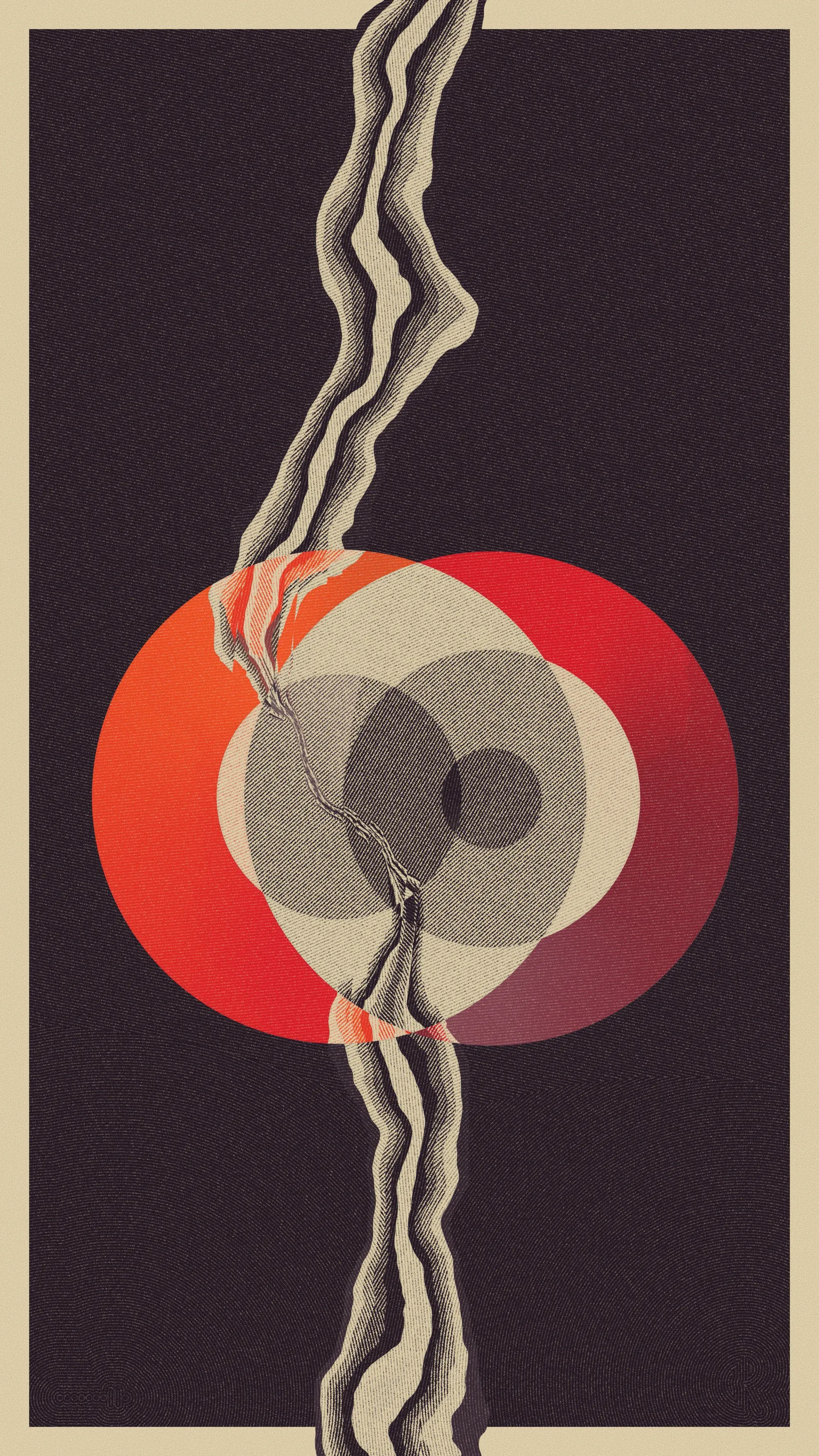
Résilience is a deeply personal algorithmic project, born of a year exploring visual patterns and textures. It dropped in November 2024 on gm.scribe. Each edition stands for a moment of a life, a trial that was overcome, a slow but real transformation. Drawn from a health experience that had a heavy impact on my life, hyperacusis and tinnitus, the work is about the human capacity to adapt, to heal and to move forward.
Through abstract forms, evolving palettes and a subtle animation, Résilience invites collectors to find, in a given piece, a resonance with their own path. It is a piece about persistence, about rebuilding, and about hope.
It is also my first project on Bitcoin.
What comes next
I have projects in the works, shows and drops on the way. I would also like the chance to show my work, and algorithmic art more broadly, in my own city of Montpellier, or at least in France.
I get a lot of pleasure out of introducing people to this world. I have presented algorithmic art through my own path at DevFest Toulouse in 2023, and more recently at MiXiT and MontpellierJS.
If you want to follow along, it happens on Twitter and Instagram. There is also the GENART podcast.
Thank you to everyone who has been part of this.